My Garden

A cross-post of sorts,  a guest post by me from my garden blog, I’ve just stolen this piece in its entirety and placed it here. Today is that sort of day. Cheers!

Seattle has experienced an unprecedented 80+ days with only .07 inches of rain. We’ve had some cloudy days, marine-layer mornings, but no measurable rainfall. After a cold June, August through a few days ago has been summer and late summer at its finest. While I look forward to cleaner air, a green lawn, and water next summer, I feel a mild urgency tinged with melancholy as rain is once again in Walter’s forecast.

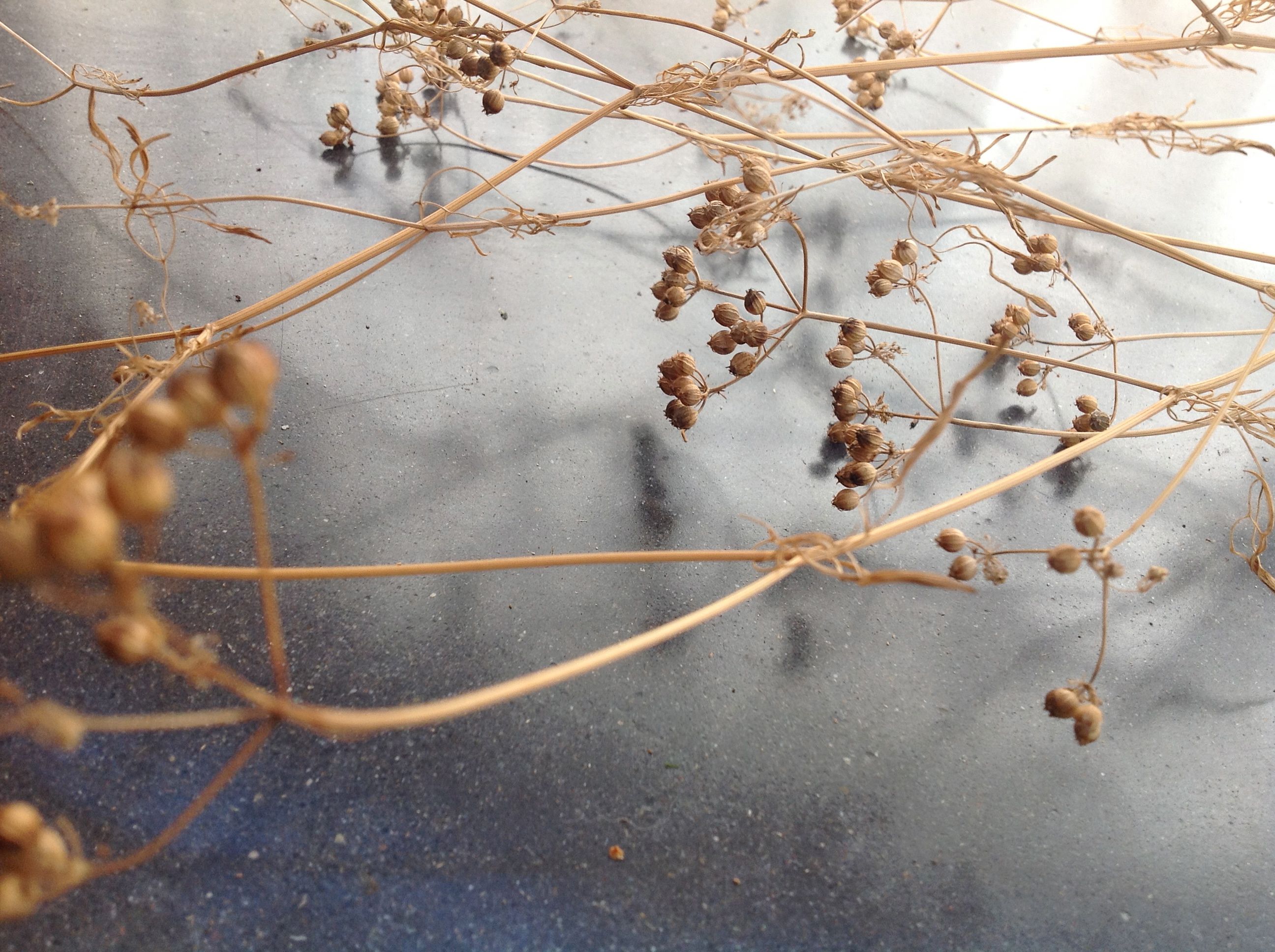
These few days before the heavens open again for who knows how long, have me clearing beds for winter cover crops and garlic planting; preparing fall planted lettuces to be covered for winter; collecting seed pods to store then plant come spring; enjoying the last bits of texture and color.

cilantro seed aka coriander

next season’s freebie lettuces

blushing blueberry

The earth here is dry. Not thinking about socks, not worrying about boots or umbrellas, it transitions so easily from weather to weather. I do look forward to no longer being held hostage to the garden hose. I look forward to our dinners in front of the fireplace. I look forward to giving turn to the blog posts queuing up in my memory. After working amazingly hard for the past 6 months, I’m glad the soil gets to rest, reacquainting itself with the minerals and microbes it loves so much. I can’t help but feel a sadness though, the feeling one has when bidding farewell to a very good friend.

Thrift Store Love

Huffington Post reported yesterday:

Macklemore’s iTunes Sales Impressive; Seattle Rapper Reaches No. 1 On Download Chart

You can read the story here. Now, the reason this got my attention is not because I’m a rabid fan, listening to Ben Haggerty’s music day and night. Truth be told, I have only listened at the insistence of friends half my age, and only when Junior is out of ear shot. I did fall in love, though, with the attitude of Macklemore X Ryan Lewis when I saw this (disclaimer: the song may get stuck in your head and Haggerty seems to love what we learned as kids to be the ‘F Word’). I love thrift stores. This was a rap about thrift stores. Faneffingtastic!

I am not an ironic hipster. I am not a bohemian, loft-living artist. I am someone who wants to shorten the distance between product and consumer. When I think of shopping, my first thought is what day of the week it is, and then, how can I fit one of two nearby Goodwills into my errands. If I can buy something used, I do.  Goodwill is my go-to for clothing my family, for odd-sized unused envelopes and other office supplies, sports equipment, glassware, small appliances, candles, linens, curtains, the list goes on. I have a stash of baking stones. Since they break and I haul them around when need be, I buy them whenever I see them at a thrift store. Since the advent of eBay, some items like Lego’s have become a Holy Grail of sort, but I did find them once. Another prize I picked up was a vintage Le Creuset pot for less than ten dollars. It’s fun, like a scavenger hunt, with my dollars supporting various charitable organizations.

If I went to Wall-Mart or even Ikea, I could find similar items for less money. Buying new, buying super cheap new, encourages companies that produce these items to continue using child labor, to continue providing unsafe working conditions where workers have no recourse, no voice. These workers are happy to get a job, sewing jeans for 18 hours a day, getting paid pennies to our dollar, but for what? So that I can have a closet full of low-priced, cheaply made clothes that I only wear a few times before getting more? What’s worse are high-priced items, produced at the same facilities, shipped halfway around the world, sporting a particular label, which entitles the parent company to rake in cash because of the cheap, cheap labor.

I know there is some irony at play here. Someone has to donate items to a thrift store for the cycle to work. Someone has to have or procure items before I can buy them.  While as much as possible I remove myself from the cycle, and encourage others to do the same, people are going to buy things new, tire of them, donate them to a charity, then buy more new things. I have no fear or worry about thrift stores running out of donated items. Reducing the quantity would mean more demand, more income for these non-profit businesses. My first choice is Go Without, second choice is Search Thrift Stores, last choice, and at times necessary, is Buy New. Buying new also provides challenge in sourcing items that are as out of the mainstream as possible. Some things Spouse and I have found:

http://www.fairindigo.com/

http://cydwoq.com/

http://alchemygoods.com/about-ag.html

There are many others, none of the products considered a bargain, the purchases being made from careful consideration, and some financial sacrifice. I know these choices, this lifestyle is not for everyone. I think, though, that making an informed decision about what we buy is for all. Seattle, while a mixture of many lifestyles, goes a long way in supporting my consumer choices. Perhaps only in Seattle can a duo write a song about thrift store purchases and end up the most downloaded group on iTunes.

E.T.

Before the start of my sophomore year of college, I did a little fall shopping at a north Seattle mall. Per usual, I parked outside The Bon Marche, wove my way around Men’s Shoes and Active Wear, past the Lenox and Waterford near the Bridal Registry, and through Cosmetics to enter the grand internal cavern of Northgate. I don’t remember what I was there to get. Perhaps I needed socks or jeans or the perfect sweater to motivate me through Economic Geography.

The first sense to be activated upon entering a Mall is scent. Newness outnumbers shoppers, so unless a heavily perfumed person is close by, I am always taken by the lingering quality of freshly steamed twill, perfectly folded wool, or never-worn shoes. Almost simultaneously, the brain responds to what the eyes bring: chin-high racks, shirts sorted by size, sleeve, or sale; rotating racks, affording views of the entire necktie collection; sturdy glass cabinets, proud of their shiny contents. Shiny associates, perfect skin, managed hair offer: ‘Are you finding what you need?’, ‘Can I help you find something?’ ‘Let me know if you need any help.’ Entering the heart of the Mall slams the senses: the constant buzzing hum of indistinct voices, weary parents chastising running children, laughter, crying, Mrs. Field’s, Woolworth’s popcorn, the cathedral-sized brick façade of Nordstrom.

After only a few visits, the brain acclimates to what it now knows as MALL. I can enter without any particular awareness, thoughts busy elsewhere as I find my destination. If everything remained new or unusual to our brains, we would get nothing done. On this trip, such was my disposition-expecting a usual mall experience. As I walked toward Nordstrom, I began to rouse, take notice of something very different. Why were these people, mostly children, milling about wearing eyeball-bobber-antenna-headband things?  They were everywhere, in packs and herds.

During the dark ages before Facebook, Twitter, Tumbler, or cell phones, it was possible to get away. I had experienced a summer full of sun, ferries, witty, intelligent people, no TV, and the joy of operating a Jacobson Outfront Deck mower. I was away the summer E.T. visited our humble planet, an alien who apparently brokered a deal with fast-food chains to offer movie related paraphernalia to children. I was 19. I was going to save the Third World. This blatant pandering for economic gain sickened my imperious little self. I vowed, really not so imperiously, that I would never watch the movie.

Attitudes such as imperiousness or vanity or justification are blinding.  I was unable to see the irony: I was in a Mall, the sole purpose of which is to pander for economic gain. The clothing, like the movie gadgets, originated in the developing countries that I felt so tied to. I was wearing, buying, using products just as bad, or worse, than the ones I was judging.

I’d like to say that I’ve spent the intervening 30 years aware, activated for change, fighting for worker rights, justice for all. I haven’t. I’ve had moments, causes through the years, but it wasn’t until I became a mother that everything started to change. I set to learning and dominos started falling. The impetus of participating in a child’s history, feeding the roots that his life would grow from, assisting him in acquiring skills to navigate that life, has moved me to think differently, live differently, and personally grow. I can’t change society, I can’t change governments, but I can change myself. And though the reasons have changed, I still haven’t seen E.T.
 

First House

Spouse and I moved far enough away so visitors had to commit, but our commute didn’t suffer. We found a house on acreage, a remnant of a former faith-based co-housing community, tucked on a perch above the Tolt River. The house had the feel of add-on. Not from well-thought-out design, I could never be sure which part was original: maybe the back section closest to the river, the section using large boulders for foundation support? The place was funky.

The rickety front door opened into the kitchen-dining area, with a free-standing range and south wall row of cupboards/counter/sink. A step down presented the living room, with the entire room curving around to give privacy for sleeping.  Shag carpet was throughout. The bathroom was standard, save for the rough cedar planked walls and the close-set drying rods: there was no chance our enormously plush wedding towels would ever dry. We moved in our essentials: futon, stereo with LPs, upright piano, books, table, and kitchen gear. I wasn’t a cook yet so the small number of cupboards warranted plenty of storage.

We now lived a few miles outside of a small rural east King County town. Next to our house was an adequate duck pond, where the poultry trainer I had evidently married quickly made acquaintances. Next to that was an unused barn, an empty pasture, then two more houses where our co-landlords lived. Don was the first adult (I still didn’t feel like one) I had met who was truly captivating in an unpredictable way. He lived in his own time zone and seemed to understand the importance of happiness. Spouse asked about adding a couple of goats to the empty barn and pasture. Don, leaning on the fence, looking over the pasture, appeared to be listening, but replied with:

You know what I’d really like? I’d like to have a party, where everyone could sing and no one could laugh.

We two young twenty-somethings didn’t know how to respond. “Yeah-that’d be great. What about my goat idea?” Never getting an answer, we never got goats. We did house some Silver Spangled Hamburgs across the street in an unused chicken coop, loved being housemates with Shirley, Goodness, and Mercy, and we saved Fred the beagle from certain death at the Humane Society. I planted a small vegetable garden.

The Tolt River Reservoir is one of the primary sources of Seattle drinking water. I had learned of the reservoir, and I had learned on the edge of our lawn, hidden by a well-placed Douglas Fir, was a siren which would be used if the reservoir dam ever let go. I had not learned that the siren was routinely tested on Wednesdays at noon. That first summer Wednesday at home was an epiphany. Spouse had driven the 1970 VW Transporter Type II to work and I had the Beetle: how much stuff could I cram into that tiny vehicle and still get away with my life?

My favorite memory associated with this house has more to do with living in a small town.  Some friends sent us a card, a Thank You perhaps? I don’t recall. They addressed it:

Our Names

The Little House with Blue Trim on Tolt River Road

Carnation, WA

We received it. The town was small, the landlords were kind, accommodating, inviting, and the house was probably, eventually condemned. Living on the edge of normal, on the edge of disaster, on the edge of what we hoped to be a long life together, this was the perfect place to begin our story,

Hope & Promise

The 3 bedrooms, 1 bath occupied the north end of the 1960s rambler. A short hallway serviced these rooms, at the end of which was a bank of deep closeted shelves atop 3 oversized drawers. We called this the Linen Closet. Christmas lived for 11 months a year on the topmost shelf, we visited the next shelf anytime a gift needed wrapping, and the lowest shelf was the place of table linens and candles and things to make our dining area gorgeous.

Of the drawers,  extra pillows and blankets, including, every moth’s favorite, the scratchy moisture repellant army-green wool, resided in the lowest. The middle drawer served as our hand-me-down depot and out-of-season clothing storage, while the top drawer, a space large enough to be a child’s bed, held the fabric.  We had enough fabric on hand to play fabric store at a moment’s notice, complete with yard sticks and Fisher Price cash register. Even now I entertain thoughts of climbing into that drawer and just rolling around in the stuff. Part of our family economics included sewing clothes rather than paying 3 to 4 times the cost on Ready-Mades. We had a large inventory of patterns: Simplicity, McCall’s, Butterick, and Vogue, sorted by size in boxes designed to store patterns. Fancy. My mom sewed our jammies, bathrobes, Easter & Christmas dresses, skirts, tops, costumes, and, for a while, our pants. Rather than my mom’s insistence that every seam be perfect, maybe it was the pants that put me off sewing.

I don’t have many memories of my clothes, outside of things I’ve seen in pictures. I know I had favorites over the years. I remember the fantastic green faux velvet choker Callie, the most elegant person in my 4th grade class, gave me for my 9th birthday. While I don’t remember much, I wonder if I’ll ever forget the pants. Sixth grade. Even in real-time it was a slow motion realization; a sort of, I look at them, I look at me exchange, the thought, the comparison sinking in: they are wearing jeans, made out of jean fabric, I am wearing dark blue polyester home-sewn pants with an inverted seam running the length of the leg. I don’t remember being teased, or anyone, not even Cheryl, the most popular 6th grade girl at Maywood Hills, saying anything, but the mortification set in. That was the last day I wore home-made pants to school.

Fast forward 30+ years. I own a basic, basic sewing machine. I have a few patterns on hand but tear those up for use in torn paper collage. I’ve machine-pieced some quilts, thrown together a couple of work-in-the-garden skirts, and I made a kick-ass bear costume for Halloween when Junior was 6. I like the idea of sewing. I love the idea of reducing my consumer footprint by DIYing cloth projects. When push comes to shove, though, my hands go up and, meh, I go to Goodwill or go without. The fabric, it still grips me. Like nice paper, or any blank paper for that matter, a bolt or roll of fabric is limitless, nothing set, fixed but I don’t have to sew the way I sometimes have to write. The texture, the fibers, the print, the potential of fabric, these are enough.

can’t tell the year but the fabric print looks fantastic!

What Not To Wear

There I was, in front of my closet, barefoot, shoulders drooped, hands hanging limply at my sides. It was Friday early afternoon. A few hours on, I’d be witnessing the wedding of two people I didn’t know, sitting with people I didn’t know, drinking wine with people I didn’t know, chatting, laughing, working hard to wittingly banter with people I didn’t know, save for my partner. The people with whom I’d be sharing my evening away from mothering would be those my partner spends his days with: co-workers. Ugh. It might go without saying that being raised by wolves and lacking strong fashion sense go hand in hand. I will say it anyway. I was unable to discern any dressing tips from the invitation due to it’s misplacement the day after arrival by mail. I hadn’t been sure we were even attending until Spouse revealed he’d been emailed twice by the bride, needing confirmation for our table setting. Twice. Wow. She really wanted Spouse to attend. So there I was, standing ill-at-ease before the altar of couture.

I live in a suburb of Seattle, a city idolizing individuality and the outdoors. I embrace the lifestyle of simplicity. I make beautiful bread, can tomatoes, grow cucumbers and carrots and green beans. I’m honing my skill as a Chicken Whisperer. I spend afternoons fighting my son with light sabers, Nerf guns, and long sticks as lances. I believe what I consume should not come to me cheaply, produced on the backs of Third World Children or underpaid mothers trying to keep themselves free of more lucrative but deadly ancient employment. I rarely buy new. I support thrift stores and the charities they support. One can get great clothes from Goodwill or Plato’s Closet if one knows what to look for. I readily accept shopping tips and hand-me-ups from my fashionable nieces, women who know what is appropriate for their auntie to wear.

Still. I had spent a few hours combing the Internet for information about what one should wear to an early September Friday evening wedding in Seattle. In keeping with all my other specific internet search results, I read about east coast weddings, Sunday weddings, July weddings, and weddings on the beach. No help. I felt confident in my election as Clinton & Stacy’s or Trinny & Susannah’s poster child. Thursday I had made a pilgrimage to Target for sheer black hose, emergency cami, and a black bra with interchangeable straps that wasn’t already stuffed-what the hell is up with those push-ups? My hair was newly trimmed and cute. I had worked hard to get the garden off my hands, all the nails clipped to equal length. I had made my choice from two dresses, settling on a purple, halterish-backed, Calvin Klein number, a selection originally owned by my far more stylish younger sister. I had borrowed a beautiful sheer throw from other sister and fastened a never-before-worn necklace around my neck. My short heels were candidates for Cruel Shoes but since Spouse and I aren’t dancers, I didn’t worry.

Dressed, Spouse home early, Junior delivered to Grandma’s, we set out, and in 7 minutes, stuck in quintessentially nasty Seattle Friday evening commuter traffic. We had to travel 17 miles, the venue just south of downtown. What should have taken 3o minutes, took 75. After prematurely exiting from I-5, Spouse revealed that no, we weren’t still 10 minutes early, we were, indeed, 20 minutes late. The wedding started at 5Pm not at 5:30PM, the time inexplicably lodged in my brain. My happy banter a few minutes earlier changed abruptly, moving wildy between shock-disbelief-incredulousness-explicatives-anger-not wanting to go but then, dammit! I went to all this trouble, all the expense (the Target purchases were not part of the week’s budget), all the emotional wrangling getting myself into a good place with me, of course I was still going! After a wrong turn, sending us eastbound on I-90 with no means of correction until we reached Mercer Island, we, meaning I, had time to simmer. My belly meditation didn’t do a thing but checking my phone’s email produced this:

The Cast Party

by Scott Noelle, posted on 2006-12-06

As Shakespeare said, “All the world’s a stage, and all the men and women merely players…”

Today we’ll take that metaphor a step further, for when a play closes, the players celebrate their accomplishment with a cast party.

At the cast party, everyone relaxes and recalls the goof-ups, missed entrances, botched lines, and malfunctioning props — not with the terror these mishaps evoked at the time, but with rolling-on-the-floor laughter!

NOW they can laugh because the pressure is off. They’ve put away their costumes and returned to being who they really are.

Here’s the wonderful thing about the real-life play called Parenthood: You don’t have to wait for the cast party to relax and be real. You can “break character” and re-write the script on the fly.

So why not make the play itself more like a cast party?! Why wait until it’s over to enjoy the difficult times?

Life is NOW! And it’s all good.

An email from a parenting support list changed everything. In this real-life play of attending the wedding of strangers, why wait to enjoy the difficult times? We both laughed in disbelief, for serendipity and relief.

We arrived at the venue just as people holding beverages mingled, and venue staff changed the room from sanctuary to banquet. Any earlier, we would have awkwardly interrupted final words of vows or the kissing or announcing. As it was, we signed the book, dropped off the gift, and headed straight to the Yakima Valley Pinot Gris. Drinks in hand, we found our thirsty tablemates, who we directed to the bar like we had always been there.

Kale

With my roots in northern Europe, specifically  Scandinavia, I love that I love kale. Kale is a hearty green, a green that is able to grow year round in many climate zones, wilting a bit during a freeze, but bouncing back when the ice releases its grip.

I grow kale

I preach kale

In My Tiny Kitchen

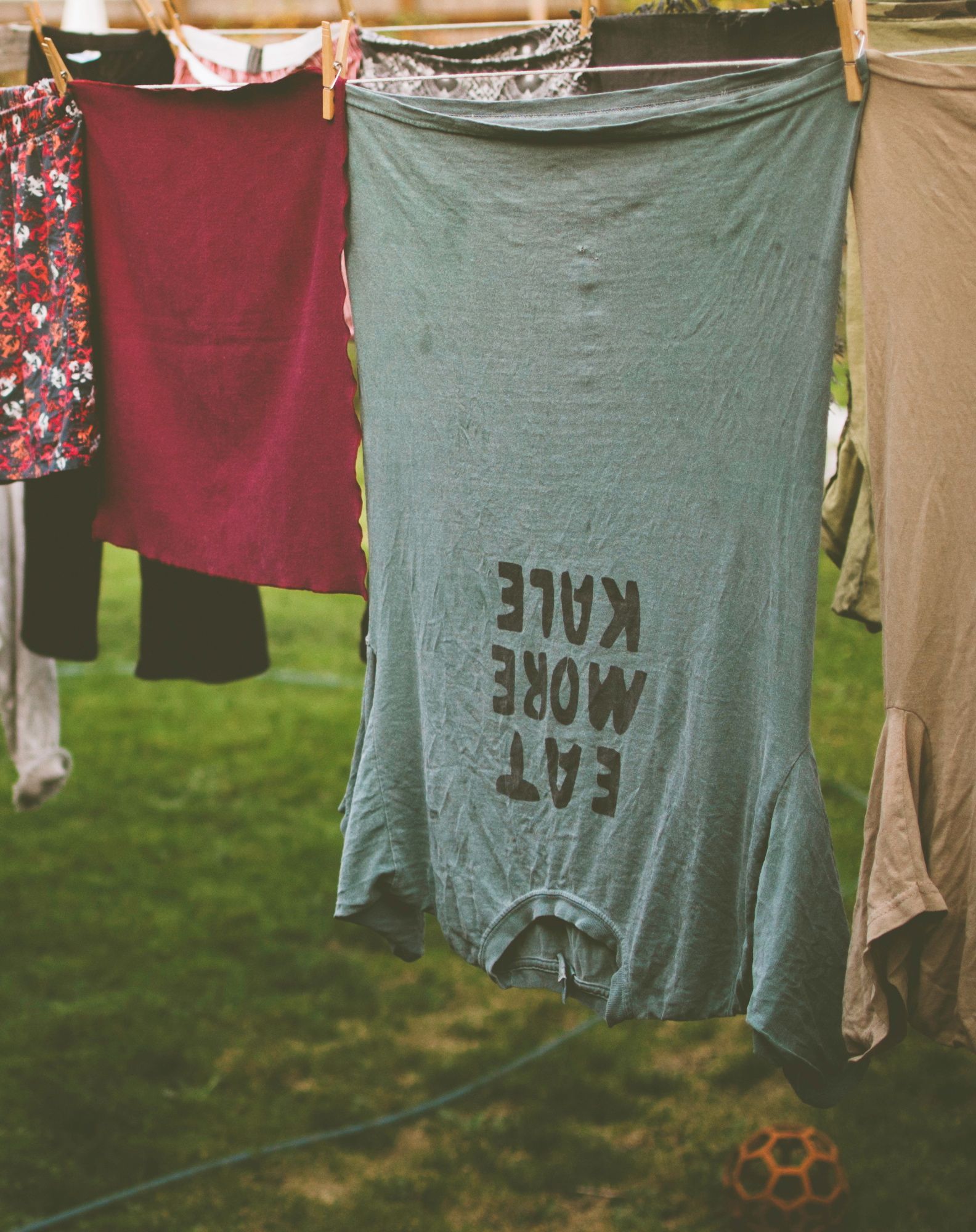
I wear clothing advertising kale

This beautiful food is even being promoted by WebMD:

Kale is a Nutritional Powerhouse

One cup of kale contains 36 calories, 5 grams of fiber, and 15% of the daily requirement of calcium and vitamin B6 (pyridoxine), 40% of magnesium, 180% of vitamin A, 200% of vitamin C, and 1,020% of vitamin K. It is also a good source of minerals copper, potassium, iron, manganese, and phosphorus.

Kale’s health benefits are primarily linked to the high concentration and excellent source of antioxidant vitamins A, C, and K — and sulphur-containing phytonutrients.

Carotenoids and flavonoids are the specific types of antioxidants associated with many of the anti-cancer health benefits. Kale is also rich in the eye-health promoting lutein and zeaxanthin compounds.

Beyond antioxidants, the fiber content of cruciferous kale binds bile acids and helps lower blood cholesterol levels and reduce the risk of heart disease, especially when kale is cooked instead of raw.

I believe kale will be my symbol, my mascot. Go Kale!

Nordic

Amborg. Holmfrid. Inga. Olaf. Do these names inspire passion, visions of windswept vistas, heaving chests of toned muscle or full bosom? Can you imagine them as dance partners, steaming up the lenses of the audience while engaging in a full-frontal tango? Or is the conjured vision one of clay-soil-toiling, no-nonsense sea gleaners, inhabitants of the short-seasoned north? Ah, such is the joy of being Nordic.

The long-wintered northern climes of Europe, produced a people who worked hard for survival. The short growing season required constant labor to produce the food that would last through the winter. Root cellars and smoke houses were common, vegetable pickling increased the storage longevity of produce, and crops were grown then stored for the animals, winter’s source of protein. Men, women, and children spent their time on food production, as well as the felling of trees, and splitting firewood for winter warmth. The long winters were busy with the caring of animals, keeping the fires burning, telling stories, and celebrating holidays. These people groups did dance, even with closely held couples swirling around the dance floor, but the image of groups of women, dressed in layered skirts, scarves, aprons, hands on hips as if in disapproval, scooting around the dance floor with care, is the one I connect with.

In my house, we grew up Nordic with the added constraint of my parents’ very conservative religious upbringing. In fairness, our upbringing was looser than the one my parent’s endured, but practically speaking, it was still:

We don’t drink, smoke, chew or go with girls who do.

You can insert the word dance in between ‘smoke’ and ‘chew’. In a theological nutshell, people are born bad because of Adam and Eve’s misstep, and the physical body is the vehicle for this badness. Ergo, one must control one’s body and behavior to avoid the appearance of badness.

At the deepest core of their being, humans respond to beauty, to music. Little kids live in the moment. Small children are accepting, forgiving, responsive. They learn  judgement, intolerance, inhibition, and self-loathing. I don’t remember what was playing, perhaps it was the soundtrack to Disney’s Snow White, but my sisters and I were dancing around the living room. I remember the laughing, the fun, the silliness of it. I also remember my mom’s words:

Girls, don’t wiggle your bottoms.

She made this statement on more than one occasion and it did the job. Now, while it seemed that gossip was acceptable, moving one’s body was not. I became stunted. I didn’t learn how to move my body, even to  where my feet wore cement shoes while playing tennis. I hated school dances, which we went to, go figure, as I had no skills to use there.

Encouraging or discouraging, words spoken at a pivotal point in a child’s life will have devastating effect; devastatingly good or bad. Today, I’m married to man who doesn’t dance with his body but who creates music that bodies can move to. I’m mother to a boy who has rhythm coursing through his veins. I choose to stretch myself, dancing goofily with my son, responding with movement when he creates a groove or highlights a piece of music that intrigues him. I have danced along with the theme music of various video games at the behest of my boy. I practice yoga and karate, creating a connection between my mind and my muscles. I do believe in a creator God. I believe that God’s creation is good and I am part of that creation. With all respect to my ancestors, I have stopped using Nordic as an excuse and have started rewriting my story.

Nature, Nurture, Hope

The physical traits of a person are easy to tie to the combined DNA of that person’s parents. I inherited the shape of my thumbs and large toes from my dad. Mom contributed the fair of my hair, skin, and the need for mascara if I want to look as though I have eyelashes. The mixing of my dad’s brown and my mom’s blue eyes resulted in my sometimes blue, sometimes green hazels, a physical trait I love. Moving away from physical to traits of personality, and perhaps abilities, the idea of Nature vs Nurture comes in to play.

How does a person become compulsive, melancholy, tolerant, happy, or addicted? I never thought much about this question until preparing to adopt our beautiful son. The act of attaching a human to ourselves that we didn’t produce, prompted me and my partner to begin paying close attention to what makes somebody be that somebody.

Some of my skills or traits have been easy to tag as nature: lack of definition between ankle & calf (all paternal); high level of organizational skill (mom); active imagination (dad); conclusion jumping (mom); proclivity to stand on soap boxes (dad); my love of cleaned off kitchen countertops (mom); how music moves me (dad).

Other traits are the seeming result of the genetic input of my parents, coupled with the physical and emotional environments I occupied. I think my dad’s love of words and innate imaginative skill coupled with my mom taking time to read to me caused my life long love of books. I think I acquired my level of can-do from my grandparents, though the tempering by dad’s melancholy and mom’s compulsion created a mutation that, at times, renders me useless.

I don’t think any trait is solely produced by environment. I think innate physical and mental abilities will stunt or bloom given one’s environment. I grew up with an aversion to competition, having ability but never going very far in music or tennis or writing. The lack of confidence in both my parents, their lack of seeing themselves as successful,  kept them from knowing how to encourage me into someone they were not. A college professor of mine, a poet who loved gaelic, was the first person to ever urge me to take my writing somewhere. I didn’t have an emotional place for her words and blew them off until a few years ago. I started to think of me and what I wanted as a good thing. I began to take what I was given innately, what I had been given environmentally, and with what I saw that I wanted, started sifting, sorting, discarding, adding.  Where this blog could be an amalgamation, combining love of language with the need for validation and significance which emanated from my dad, I choose for it something else. Through awareness, I can find things that may have roots in dysfunction, but are healthy when turned toward the positive. Writing as a cognitive exercise, writing as a means of transparency, writing because I want to, writing because I can, take the place of need or lack as  ignition.

I grew up with the successes and limitations of my family. We all do. I choose to take the qualities and skills they gave me, reshape as necessary, then add more chances to try, more opportunities to improve. Cheers!

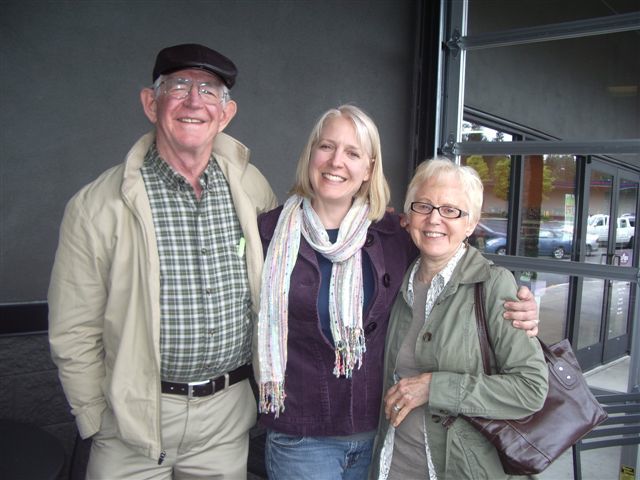
My folks, who I love deeply

Progenitors: Part II

Not a blog about my parents nor their parenting skills nor how they would have benefitted from a good therapist earlier in their lives, I feel there is staging required for the story of me. While the early years were fairly drama free in my memory, my folks had their own intra- and interpersonal difficulties.

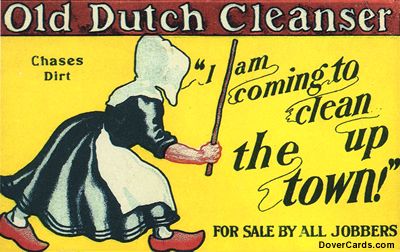
My mom was, and still is, a driven worker. She always had projects: painting a room, weeding a flower bed, sewing some jammies, canning pears, scrubbing mildew from the aluminum framed windows, cleaning the oven, ironing. While there was work to be done, work required by the economics of a family of 5 on a teacher’s salary, my mom seemed to go above and beyond. The woman in the Old Dutch Cleanser ad is very like my mother’s attention to dirt, grime,

one of these hangs in my mom’s laundry room


spots on the carpet or cupboard fronts: freakishly strong for a petite-sized person and serious in her work effort. Even now it’s not uncommon for her to begin a conversation with ‘Oh honey, I’ve been grubbing out _____’. The Law of Entropy ensures my mother will always have work to do. She would sit down to read us a story; my favorite memory is her reading The Secret Garden to all three of us. And she always sat down for morning coffee break-sometimes just with us, sometimes joined by her sister who lived next door.

The two moms would gossip, sip their perked-in-aluminum coffee, and nibble on Ayds Diet Candy. It was a given that mom was busy.  We were to play with each other inside or outside, with not much attention or notice given until a conflict arose. We lived in a private neighborhood with four houses, including Grandparents and Aunt/Uncle/Cousins, so outside play, away from the house, was normal. A psychotherapist might enjoy delving into my mom’s insatiable drive to stay busy.

sisters

My dad was, and still is, a tortured melancholy: intelligent, articulate, but without confidence in or healthy pride of himself. He worked the hours of a public school teacher, commuting 30-45 minutes each way. He taught spanish and the occasional additional subject, to city middle school students. We went to a school faculty talent event once. I remember thinking the school’s performance theater amazing, and remember only bits of the music teacher’s act. I vaguely remember being at the school once or twice while he set up his room for the fall start. Other than that, my dad left his work at work. He had his own projects at home: fixing cars and other mechanicals, mowing the lawn until we were old enough to run the mower, doing house repairs before the term DIY came into use. He was a reader and, pre-internet, would have some current affairs book, Consumer Reports, or the Bible in hand. He watched the news and loved watching television sports, especially football. Memories of playing high school football in small town southeastern Oregon were some of my dad’s favorites. I know how to throw a football. My dad loved language and words, but he also needed for others to hear him, to understand his viewpoint. He didn’t write much, but discussions on politics or religion were common, and when young, it just sounded to me like the adults were fighting. This impression went deep. When I began to find different viewpoints in college, I learned quickly that if I didn’t want to experience a ‘discussion’ I kept these viewpoints to myself.

My dad loves all things Spanish, Latino, South American. A Mexican exchange student once told my dad that he had a Mexico City accent. This pleased him! He kept up on the language by reading it, having conversation with any native speaker he met, and taking trips to Mexico and South America as an interpreter. A point of great gratitude for me is that my dad insisted we never tell racial jokes, take part in racially motivated negativity of any kind-unless they were Ole and Lena Norwegian jokes; we could pick on our own ethnicity. My dad loves beauty and was, for example, behind the photos of flowers in our yard, sunsets on vacation, and plates of food on Father’s Day or Thanksgiving. He appreciated things that my mom overlooked in her busy-ness.

driving home from my grandparents

Not uncommon, I think my parents are the products of their families, of the socio-cultural constraints of those families, of the hurt and pain they experienced growing up. Also not uncommon, my parents embraced the religion of their upbringing, using it to try and propel themselves into healthier beings, but not acquiring any skills aside from prayer to make internal changes happen. Using busyness or opinions as a shield, my parents have been unable to heal, have been unable to grow into the full human-ness I believe is available to all. I love my parents and appreciate the life they gave to me. I look forward to moving myself beyond their limits.